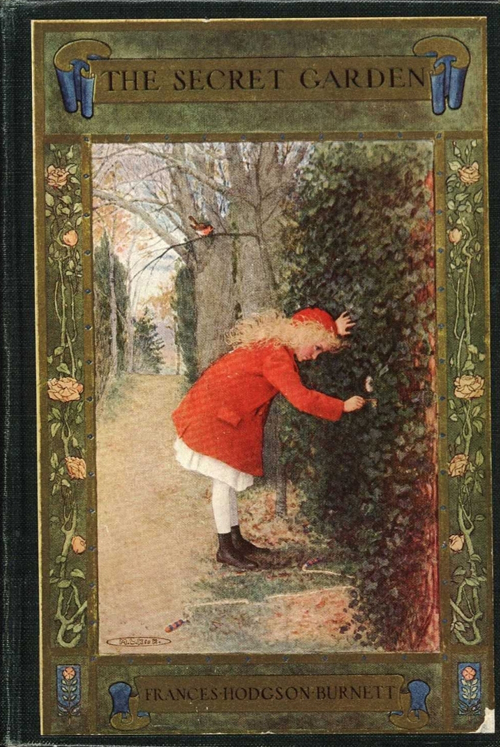
When I was in fourth grade, my teacher often had “story time” and read us first rate children’s stories. I think most of the students loved them, just as I did, but some did fall asleep at times (I think it was right after lunchtime). She read Winnie the Pooh stories often, but my favorite was The Secret Garden by Frances Hodgson Burnett. It’s a story about a 9 year old girl named Mary Lennox whose parents had left her in the care of their servants who spoiled and despised her. Both parents died unexpectedly from a cholera epidemic. Mary became an unhappy spoiled contrary child. She was nicknamed “Mistress Mary, quite contrary.” She was sent to live with her gloomy uncle in his desolate country manor in the Yorkshire moors.
One of top books of all time in Children’s Literature
As the story goes, at her new home she discovers a neglected secret garden at the manor and with the help of two new friends, and a curious robin, find out its secrets.
Written in 1910 as a series of 10 issues of a magazine of adult readership, its popularity brought it to final book publication in 1911. Despite being overlooked by literary critics and librarians over the early years, it continued to rank highly on readers polls for favorite stories.
In the 1960s (around the time my teacher read it to our fourth grade class) the readers of The New York Times ranked it as one of the best children’s books of all times.
Eventually Children’s Literature became a field of great scholarly interest. The era that The Secret Garden was written is considered to be The Golden Age of Children’s Literature (c. 1865–1926). It was a prolific era in Britain and America where literature shifted from moral instruction to entertainment, prioritizing pleasure, fantasy, and adventure. Defined by classics like Alice in Wonderland, Winnie-the-Pooh, Peter Pan and The Wizard of Oz, this period celebrated childhood innocence, wonder, and imagination.
Would you like to read it now? Read it now for free. It is a Public Domain Book available at Gutenberg.org